Learn Tarot
A working reader's field school.
Tarot the way it was taught to me — at a kitchen table, with strong coffee and no incense. No archetypal jargon, no rulebook you have to memorize before you're allowed to touch a deck. Just how the cards actually work, in my voice.
Before you learn a card
Four things I teach first.
If you skip these, you'll be a person who quotes card meanings. If you learn these, you'll be a person who reads.
- 01
Read the question, not the card.
The card is the answer. The question is the frame. Get the frame wrong and the answer is noise.
- 02
Meaning is contextual, not fixed.
The Tower means one thing on top of the Nine of Cups, another thing on top of the Fool. Learn the neighborhood, not the name.
- 03
Say it plainly.
If you can't explain the reading to a skeptical friend in one sentence, you haven't finished the reading yet.
- 04
Doubt is data.
When a card doesn't land, that's the reading. Don't force it. Note it. Come back.
The Fundamentals
Six lessons. In order.
Read them in sequence the first time through. After that, come back to whichever one you needed most.
- 01
How to actually read a card.
Forget the little white booklet. A card is a hinge — image, position, and the question in the room. I'll show you how those three things fit together before you memorize a single meaning.
8 min read
Read →
- 02
Majors, Minors, and why the distinction matters.
Majors are weather. Minors are what you're wearing in it. Once you feel the difference, half the deck stops being a wall of names.
10 min read
Read →
- 03
The four suits, in plain English.
Cups, Wands, Swords, Pentacles — feeling, wanting, thinking, having. That's the whole map. Everything else is texture.
9 min read
Read →
- 04
Court cards without the panic.
Pages, Knights, Queens, Kings. Not people so much as postures. Here's how I decide when a Court card is a person, a phase, or a warning.
12 min read
Read →
- 05
Reversals: not bad, just honest.
A reversed card isn't the opposite of the upright — it's the same story with the volume turned inward. This is the lesson I hand every student first.
11 min read
Read →
- 06
Building a spread that actually answers the question.
Celtic Cross is a museum piece. I'll teach you how to design a three-, five-, or seven-card spread that fits the question you're holding — not the other way around.
14 min read
Read →
The Field Guide
78 cards, in my words.
A 96-page PDF I wrote for the students I couldn't keep taking on one at a time. Every card, upright and reversed, in plain language — plus three of my custom spreads and a chapter on how to keep a reading journal that's actually useful.
- — All 78 cards, upright and reversed, in usable English.
- — Three of my working spreads, with layout diagrams.
- — A short chapter on reading for people you love.
- — Notes from my grandmother's original card book.
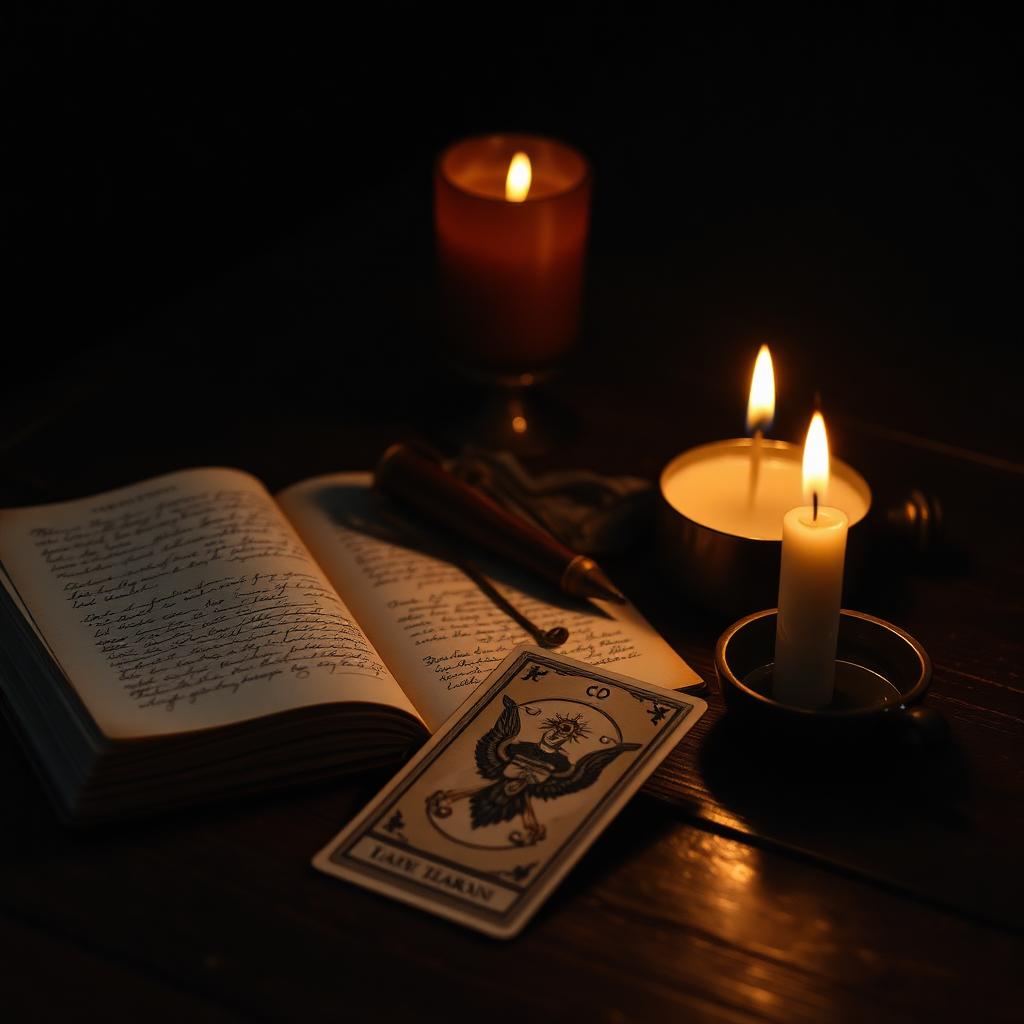
From the guide —
"A card doesn't tell you what will happen. It tells you what's already in the room."
Frequently asked
Common questions, direct answers.
The questions I get every week from students, skeptics, and people staring at their first deck. Answered plainly, the way I'd answer at the table.
- 01
What is tarot, really — is it fortune-telling?
No. Tarot is a mirror, not a crystal ball. A reading names what's already in the room — the pattern you're standing inside, the choice you haven't admitted you're making. It doesn't predict a fixed future; it clarifies the present so you can move.
- 02
What are the tarot fundamentals a beginner should learn first?
Four things, in order: how to hold a question, the difference between Major and Minor Arcana, the four suits (cups, wands, swords, pentacles), and how to read a card in context instead of by rote. Memorizing 78 card meanings is the last step, not the first.
- 03
Do I need to memorize every card meaning?
Eventually you'll know them, but not from flashcards. You learn a card by pulling it, sitting with it, and writing down what it did in a real reading. That's why the guide comes with a journaling framework — the notebook teaches you faster than the booklet.
- 04
What do reversed tarot cards mean?
A reversed card isn't the opposite of the upright — it's the same story with the volume turned inward or blocked. A reversed Ten of Cups isn't 'no family'; it's family in a private, complicated, or unfinished shape. Reversals are how the deck whispers.
- 05
Which tarot spread should I use?
The one that fits the question. A yes/no needs one card. A crossroads needs three. A situation you're stuck inside needs five to seven. Celtic Cross is a museum piece for most modern questions — I teach you to design a spread instead of borrowing one.
- 06
Can I read tarot for myself?
Yes, and you should — that's how you learn. The catch: you'll flinch at cards you don't want to see. Keep a journal, date every pull, and re-read your notes a month later. Self-reading gets honest around pull fifty.
- 07
How long does it take to learn to read tarot?
You can do a competent three-card pull for a friend inside a month if you practice daily. Reading with real depth — the kind people pay for — takes years. There's no shortcut, and anyone selling one is selling you a shortcut, not a skill.
One-on-one
Want me to teach you directly?
I take on a small number of students each season. Four sessions, your deck, my kitchen table (or video). By the end of it you'll be reading for other people — and doing it honestly.